
What Bangkok taught me about the future of beauty, wellness and longevity
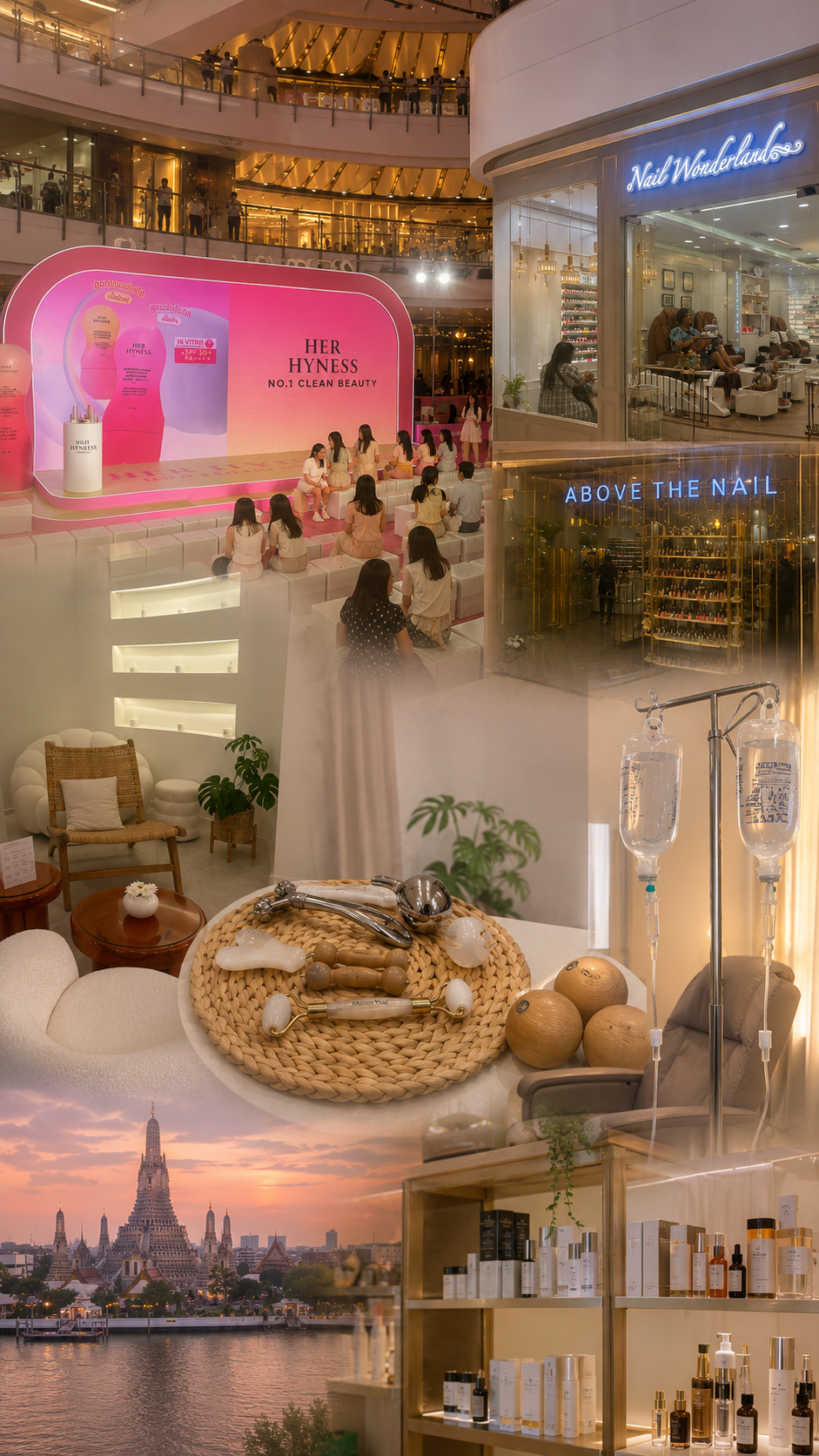
By now, most skin therapists and salon owners in New Zealand can feel it: the beauty industry is shifting.
Not slowly. Rapidly.
In March this year, I travelled to Bangkok for cosmetic and reconstructive surgery following a car accident I experienced three years ago. While the trip was deeply personal, it also became one of the most eye-opening professional experiences I’ve had in years.
What I saw across Thailand’s beauty and wellness industry made me realise something important: The future of skin clinics is no longer just about beauty. It is about wellbeing, recovery, longevity and nervous system regulation.
And Asia is already moving there faster than most Western markets.
Bangkok’s Wellness Boom Is Impossible To Ignore
The moment you arrive in Bangkok, you are surrounded by advertisements for longevity clinics, wellness centres and biohacking facilities.
Not tucked away discreetly.
Massive billboards.
Luxury malls.
Street corners.
Entire medical precincts.
These centres are becoming mainstream lifestyle destinations.
Many offer advanced blood analysis testing where practitioners assess inflammation markers, nutritional deficiencies, oxidative stress levels and even pre-cancer risk indicators. From there, personalised wellness protocols are created using various health and recovery modulators.
Some of the most popular wellness therapies currently dominating the Bangkok market include:
IV nutrient therapy
Hyperbaric oxygen chambers
Red light therapy
Cryotherapy
Functional supplements
Hormonal optimisation
Nervous system recovery treatments
Cellular regeneration therapies
What fascinated me most was how normalised this has become. People aren’t only visiting these centres when they are sick. They are proactively investing in energy, recovery, stress management and healthy ageing. That mindset shift matters.
Wellness Is Becoming The New Luxury
During my own recovery, I trialled several wellness and recovery treatments post-surgery. The experience surprised me.
After sessions focused on recovery support and inflammation management, I genuinely felt more energised, mentally clearer and physically better. Some protocols required daily visits, while others were one-off experiences.
Whether every modality has robust long-term scientific validation or not is still heavily debated globally. But consumer demand is undeniable.
The modern customer is no longer only asking:
“How do I look younger?”
They are now asking:
“How do I feel better?”
“How do I sleep better?”
“How do I regulate stress?”
“How do I increase energy?”
“How do I recover faster?”
“How do I age well?”
That is a completely different conversation. And salons that fail to evolve beyond purely aesthetic services may eventually struggle.
The Rise Of Skin Treatment Precincts
Another thing that fascinated me in Bangkok was the sheer density of skin clinics.
Inside major shopping malls, entire floors are dedicated purely to aesthetic and skin rejuvenation clinics. Laser clinics sit literally door-to-door, offering very similar treatments:
Skin tightening
Pigmentation correction
Rejuvenation lasers
Injectables
Acne revision
Anti-ageing procedures
At first, it feels oversaturated. But strangely, it works. It reminded me of the saying: “There is enough for everyone.”
Competition often feels threatening in New Zealand’s professional beauty industry, but Bangkok showed me something different. When consumer demand is strong enough, multiple businesses can thrive side by side.
The real differentiator is no longer simply the treatment itself. It is:
customer experience
education
trust
emotional connection
wellness integration
outcomes
Traditional Beauty Has Shifted Position
One noticeable trend was the positioning of traditional beauty services.
Treatments like:
lash extensions
brows
nails
were commonly offered together in nail salons or quick-service beauty spaces.
But the premium positioning in Bangkok has clearly moved toward:
longevity
skin health
recovery
wellness
preventative ageing
The emphasis is now less about “pampering” and more about optimisation. That distinction is important. Consumers increasingly want treatments that make them feel productive, healthier, calmer or biologically younger, not just aesthetically improved.
TikTok Shop Is Changing Retail Faster Than Most Realise
One of the biggest business observations I had was seeing the explosion of TikTok Shop throughout Asia.
Influencers were livestreaming products directly from shopping malls and retail activations, selling enormous volumes in incredibly short timeframes.
And when I say enormous, I mean: tens of thousands of units sold within minutes. This is not traditional retail. This is entertainment-driven commerce.
For distributors, clinics and skincare brands, this should be a wake-up call.
The next generation of consumers increasingly purchases based on:
trust in creators
relatability
education
short-form video
community influence
speed
Not necessarily traditional advertising. New Zealand is behind Asia in this space, but it is coming. Fast.
K-Beauty Is Still Dominating, But C-Beauty Is Rising
Another major trend impossible to ignore was the dominance of Korean skincare.
Sheet masks remain massive throughout Asia and continue to evolve in sophistication, ingredients and delivery systems.
What I also found interesting was how frequently male models and male faces were used in skincare advertising. In many Western markets, beauty advertising still heavily targets women. In Asia, male grooming and skincare have become far more mainstream and commercially powerful.
But another shift is now emerging: C-Beauty.
Chinese beauty brands are growing aggressively across Asia, particularly within:
skincare
beauty tech
functional beauty
supplements
AI-driven skin analysis
Historically, many professional beauty industries avoided Chinese-manufactured beauty brands due to concerns around:
animal testing
ingredient regulations
quality control
But that landscape is changing rapidly.
Many newer manufacturers are improving compliance standards, investing heavily into research and development, and producing highly sophisticated formulations at competitive pricing. Ignoring this trend entirely would be shortsighted.
What This Means For New Zealand Salons
I believe New Zealand salons are heading toward a major evolution over the next five years.
The clinics that thrive will likely become hybrid spaces that combine:
skin health
wellness
recovery
education
nervous system support
functional beauty
In New Zealand, regulations mean we cannot offer certain medical wellness services like IV drips without appropriate medical oversight.
But we can incorporate complementary modalities such as:
LED therapy
relaxation therapies
lymphatic support
skin recovery treatments
gut health support
supplements
mindfulness experiences
recovery-focused facials
stress reduction protocols
Helping clients regulate their nervous systems may become one of the most valuable services salons can offer.
Stress, inflammation and burnout are now deeply connected to:
premature ageing
skin dysfunction
impaired barrier health
acne
rosacea
pigmentation
poor healing
Consumers are beginning to understand this. And salons need to evolve with them.
Global Wellness Industry Statistics Worth Watching
The numbers support where the industry is heading.
According to the Global Wellness Institute:
The global wellness economy was valued at over USD $6 trillion in recent years.
Wellness tourism is one of the fastest-growing travel sectors globally.
Longevity and preventative health industries are seeing major investment growth.
Recovery-based wellness services are increasing significantly post-pandemic.
Meanwhile, the global K-Beauty market continues to expand rapidly, driven by:
ingredient innovation
social commerce
sheet masking culture
skin-first beauty philosophies
Final Thoughts
Bangkok made me realise that the future beauty client may not simply book a facial.
They may book:
a nervous system reset
a recovery experience
a longevity consultation
a skin and wellness programme
a preventative ageing journey
The professional beauty industry is no longer just competing on treatments. It is competing on transformation.
And the salons that understand the connection between: skin + stress + inflammation + wellbeing, will likely be the ones that lead the next era of our industry.