
LED Light Therapy: What It Does, How It Works and Why Your Salon Should Be Leading This Conversation
There is a good chance your clients are already using LED light therapy at home. Or they are thinking about it. Or they have seen it on social media and sent themselves a link at midnight with the quiet intention of buying one eventually.
LED has crossed over from clinical treatment into consumer product in a way that very few professional modalities have managed. And that creates both a challenge and an opportunity for salon owners. The challenge is that clients using devices without professional guidance may not be getting the results they could be getting. The opportunity is that you are perfectly positioned to lead this conversation, bridge the gap between home use and professional treatment, and add meaningful value to your clients homecare recommendations in the process.
But first, the science. Because LED light therapy is one of those treatments that sounds straightforward and turns out to be genuinely fascinating.
What LED Light Actually Does in the Skin
LED stands for light-emitting diode. In a skincare context, it refers to the use of specific wavelengths of light to trigger biological responses in the skin. Unlike lasers, LED does not damage tissue. Instead, it works through a process called photobiomodulation, essentially using light energy to stimulate the skin's own cellular activity.
The key is wavelength. Different wavelengths of light penetrate the skin to different depths and trigger different responses. This is not a marketing concept. It is measurable, reproducible science that has been studied extensively in wound healing, dermatology and sports medicine for decades before it made its way into mainstream skincare.
The Wavelengths Worth Understanding
Red light, typically in the range of 620 to 700 nanometres, penetrates into the dermis and is primarily associated with collagen stimulation. It activates fibroblasts, the cells responsible for producing collagen and elastin, and supports the skin's natural repair processes. For clients concerned with fine lines, loss of firmness and dull skin, red light is the wavelength most relevant to their concerns.
Near-infrared light, sitting around 800 to 850 nanometres, penetrates even deeper into the tissue. It supports cellular energy production by stimulating mitochondrial activity, reduces inflammation and accelerates healing. This is the wavelength that has the most clinical history in wound care and post-surgical recovery, and it translates meaningfully into skincare for clients dealing with sensitivity, redness, barrier impairment and slow skin recovery after treatment.
Blue light, in the 415 to 450 nanometre range, does not penetrate as deeply but is clinically proven to destroy Cutibacterium acnes, the bacteria responsible for acne. It is particularly relevant in the treatment of active breakouts and is often used in combination with red light for comprehensive acne management.
The Facts That Might Surprise You
Here is something most people do not know. NASA originally developed LED light therapy technology in the 1990s to support plant growth experiments in space. Researchers noticed it was also accelerating wound healing in astronauts. That discovery led to decades of clinical research that now underpins the professional LED treatment market.
Another fact worth knowing is that LED light therapy has no downtime and no contraindications for most skin types, which makes it one of the few advanced treatments genuinely suitable for use across every client demographic. Sensitive skin, compromised barriers, post-treatment skin, pregnant clients — LED is one of the few modalities that can be used safely and effectively across almost all of these.
Perhaps most importantly for salon owners is this: the results from LED therapy are cumulative. A single session produces some benefit, but the real clinical change happens over a series of consistent treatments. This is significant because it reinforces the value of professional treatment programmes and creates a compelling reason for clients to maintain their homecare use between visits.
The At-Home LED Opportunity
The growth of at-home LED devices is not something salons can or should ignore. Clients are going to buy them. The question is whether they buy one with your guidance and recommendation, or whether they find one online without any context about wavelengths, consistency of use or how to integrate it with their professional treatments.
When you lead this conversation, several things happen. Clients get better results because they understand how to use their device correctly. Their professional treatments become more effective because the skin is being consistently supported between visits. Your retail revenue grows because you are recommending a product that genuinely complements what you do in the treatment room. And your relationship with the client deepens because you have become the trusted source of guidance for their entire skin health journey, not just the hour they spend with you every few weeks.
This is the case for building at-home LED into your homecare recommendation and treatment bundle conversations.
Introducing Dermalyt
Dermalyt is a New Zealand-designed LED light therapy mask created by Sangita, a skin therapist with over two decades of clinical experience at Skinworks Clinic in Auckland. It was developed specifically because she wanted to give her clients something they could use at home between appointments that actually worked.
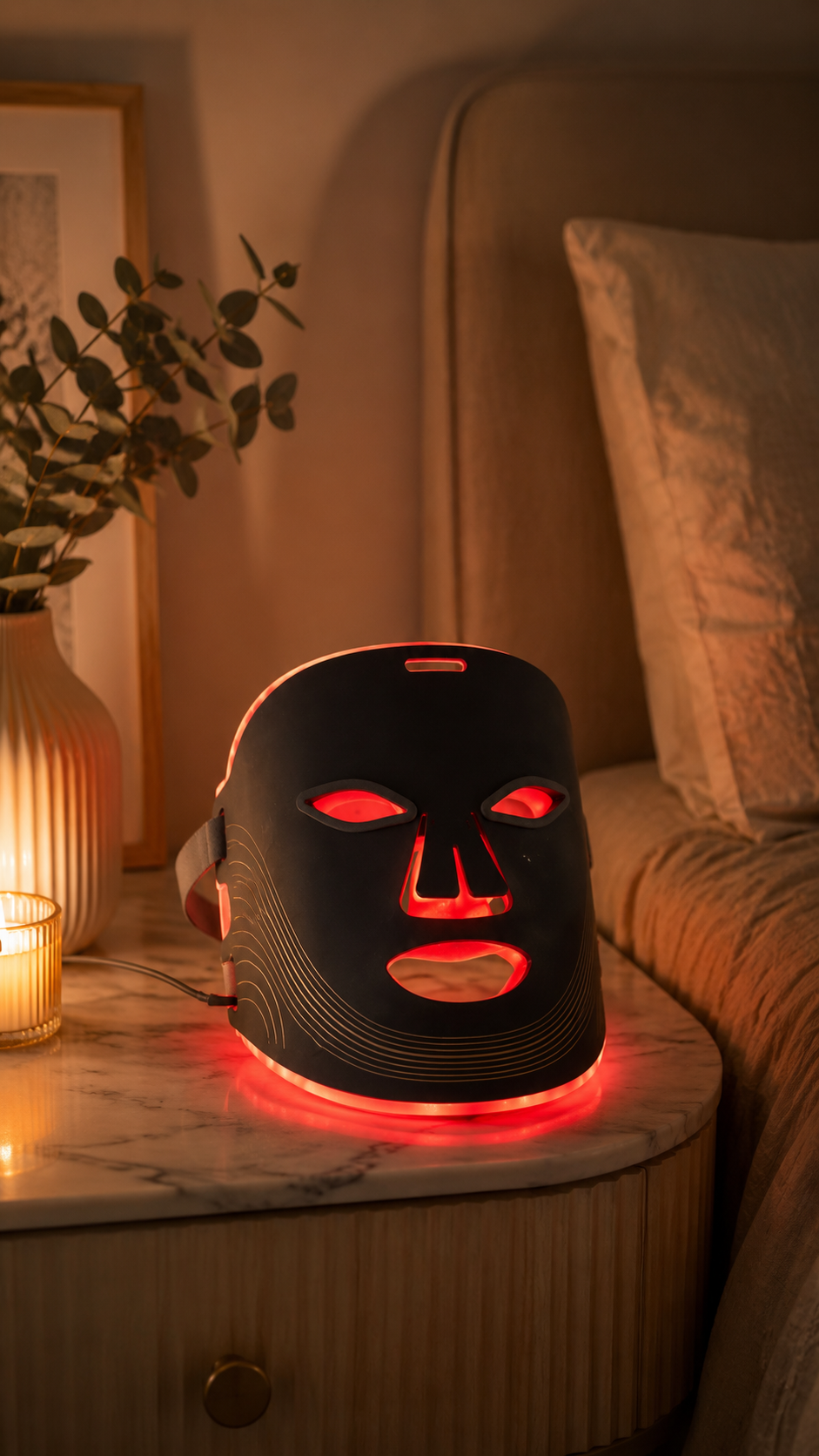
What sets Dermalyt apart is the depth of its wavelengths. Using clinically proven 660nm red light and 850nm near-infrared light, the mask is engineered to penetrate deeper than many alternative devices on the market, delivering the kind of biological activity that produces visible results over consistent use. It is lightweight, comfortable and designed to fit properly on the face, which matters more than it sounds when you are asking a client to wear something for ten to fifteen minutes several times a week.
The Dermalyt Pro LED Light Therapy Face Mask targets redness reduction, collagen stimulation and overall skin balance. The Dermalyt Pro Skin Rejuvenation System extends the treatment down to the neckline for comprehensive rejuvenation. There is also the Dermalyt Pro LED Gua Sha for clients wanting to incorporate facial massage with light therapy benefits.
Designed by a skin therapist, backed by clinical research and built for real-world use, Dermalyt is the kind of product you can recommend to clients with complete confidence.
Building It Into Your Homecare Packages
The most effective way to introduce at-home LED to your clients is as part of a structured homecare bundle rather than a standalone product recommendation. When a client is invested in a professional treatment programme for pigmentation, ageing, acne or barrier repair, their at-home routine is the bridge between sessions. Adding a Dermalyt device to that routine as part of a curated package creates a complete skin health solution that extends the life of your professional work and gives clients a daily touchpoint with their skin journey.
Consider building LED into your premium homecare consultations. When a client completes an initial skin assessment or starts a new treatment series, present their homecare protocol as a complete package — skincare, supplements where relevant, and a Dermalyt device for consistent light therapy support at home. Position it not as an add-on but as the final piece of a programme designed to deliver the best possible outcome.
Clients who invest in a complete programme tend to stay longer, rebook more consistently and refer more often. And they get better results, which is ultimately what this is all about.