
Growth Factors in Skincare: What They Are and Why They Matter
There are ingredients that arrive in the professional skincare space with a lot of noise and very little substance. And then there are ingredients that arrive quietly, backed by decades of scientific research, and gradually become impossible to ignore.
Growth factors are firmly in the second category.
They are not new. They have been used in wound healing and medical research for years. But their application in professional skincare is now at a point where therapists who understand them have a genuine clinical advantage and clients who discover them rarely want to go back to a routine that does not include them.
So what are they, how do they work, and why should they matter to you and your clients?
What Growth Factors Actually Are
Growth factors are naturally occurring proteins found in the body that act as biological messengers. Their job is to regulate cellular behaviour — signalling to cells when to grow, when to divide, when to repair and when to produce key structural proteins like collagen and elastin.
In healthy, young skin, the body produces growth factors in abundance. The cellular communication is efficient, repair happens quickly, and the skin maintains its structure and resilience without much intervention. Wounds heal cleanly. Collagen production keeps pace with breakdown. The skin looks and behaves the way we expect it to.
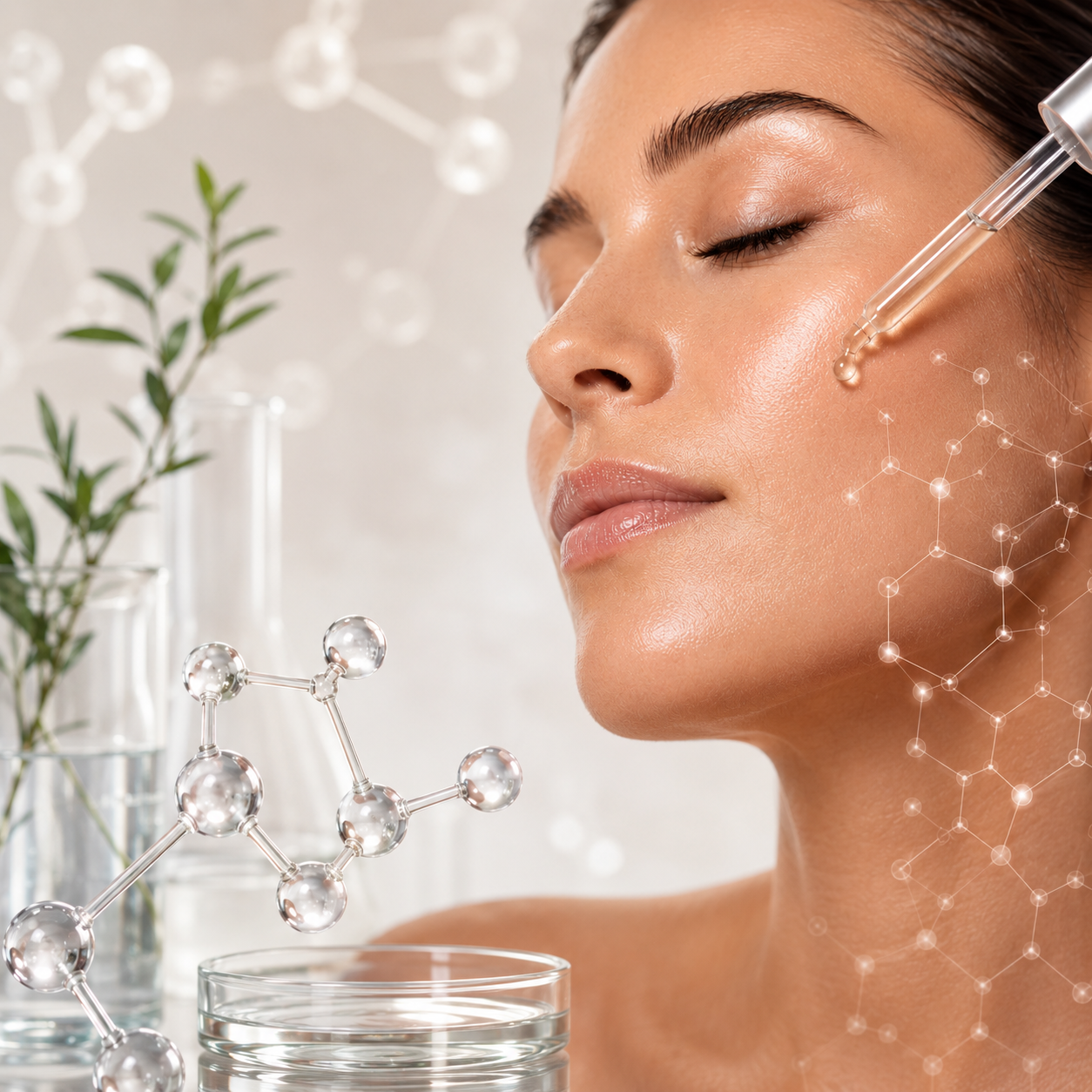
The problem is that growth factor activity declines significantly with age. By the time a client reaches their forties, the biological signalling that once kept their skin functioning optimally has slowed considerably. Cells receive fewer instructions to repair and regenerate. Collagen synthesis decreases. The skin's ability to recover from environmental damage, inflammation and daily stress is measurably reduced.
This is not simply about looking older. It is about the skin becoming functionally less efficient at doing the things it is supposed to do.
The Key Growth Factors Worth Knowing
There are several growth factors relevant to skin health, and understanding the difference between them helps when explaining their benefits to clients.
Epidermal Growth Factor, commonly referred to as EGF, is one of the most well researched. It stimulates the proliferation of keratinocytes and fibroblasts, the cells responsible for skin renewal and collagen production respectively. In practical terms, it accelerates cell turnover, supports barrier repair and helps the skin recover more efficiently from damage.
Fibroblast Growth Factors, or FGFs, play a central role in collagen and elastin synthesis. They stimulate fibroblast activity in the dermis, supporting the structural framework that keeps skin firm and resilient. Their role in wound healing has been studied extensively, and their application in skincare is increasingly supported by clinical evidence.
Transforming Growth Factor Beta, known as TGF-beta, is particularly relevant for anti-ageing applications. It regulates collagen production and remodelling, helping to improve skin texture, reduce the appearance of fine lines and support the kind of dermal restructuring that clients undergoing treatment programmes are seeking.
Vascular Endothelial Growth Factor, or VEGF, supports the development of new blood vessels in the skin, improving microcirculation and the delivery of oxygen and nutrients to skin cells. Clients with dull, fatigued or poorly perfused skin often benefit from improved vascular activity in the dermis.
How They Work in a Professional Context
Growth factors applied topically face a challenge that is worth being transparent about with clients. The skin barrier is designed to keep things out, and growth factor molecules are relatively large. This means that delivery method and formulation technology matter enormously when it comes to efficacy.
This is where the professional treatment environment has a significant advantage over over-the-counter skincare. Treatments that create microchannels in the skin, increase epidermal permeability or use advanced encapsulation technology can dramatically improve growth factor penetration and activity.
Bio-microneedling, for example, creates millions of controlled microchannels that allow growth factor serums and solutions to reach the deeper layers of the skin where they can actually influence cellular behaviour. The combination of mechanical stimulation and growth factor delivery creates a synergistic effect that neither achieves as effectively in isolation.
Exosome technology is another area where growth factors are playing an increasingly important role. Exosomes are nano-sized vesicles that carry growth factors, proteins and signalling molecules directly into cells, bypassing many of the penetration challenges associated with traditional topical application. This is one of the reasons exosome-based treatments are generating so much interest in advanced clinics — they represent a more sophisticated delivery system for the biological messengers the skin already understands.
What This Means for Your Treatment Room
The practical implication for skin therapists is straightforward. Growth factors work best when they are delivered into skin that has been properly prepared to receive them. This reinforces the importance of the prep and delivery phase of any treatment protocol and elevates the value of professional treatments that create the conditions for maximum ingredient activity.
It also creates a compelling narrative for clients. Rather than explaining skincare in terms of ingredients and percentages, which can feel technical and detached, growth factors allow you to have a conversation about what the skin actually needs biologically and how the treatment you are providing gives the skin back something it has lost over time. That is a very different conversation, and it tends to land differently too.
Clients who understand that their skin is not just receiving a treatment but being given the biological signals it needs to repair and regenerate are far more likely to commit to a programme, maintain their homecare and return consistently.
Staying Ahead of the Conversation
Growth factors are already appearing in consumer media. Clients are reading about them in beauty publications, seeing them discussed on social media and beginning to ask questions. The therapists who can answer those questions confidently, explain the science clearly and connect it to the professional solutions available in their treatment rooms will be the ones clients trust most.
This is not about chasing trends. It is about understanding where skin science is heading and positioning your clinic accordingly. Growth factors represent a genuinely meaningful advancement in what professional skincare can deliver, and the window to get ahead of this conversation in the New Zealand market is still open.
Understanding the science is the first step. Applying it in your treatment room is where it becomes valuable for your clients and for your business.
If you would like to know more about how Grace Beauty's professional treatment portfolio incorporates growth factor technology, get in touch with our team. We would love to talk you through the options.