
Why Your Hair Falls Out After Birth (and During Menopause) and What Actually Helps
If you've noticed handfuls of hair in the shower drain after having a baby, or your ponytail feels noticeably thinner since perimenopause hit, you're not imagining it, and you're definitely not alone. Hair loss tied to these two life stages is one of the most common things people quietly worry about, often without realising there's a straightforward biological reason behind it.
Let's break down what's actually happening, in plain terms and what genuinely helps.
First, a quick lesson in how hair actually grows
Every hair on your head is cycling through phases: a growing phase (called anagen), a short transition phase, and a resting/shedding phase (called telogen). At any given time, most of your hair is happily in the growing phase, with only a small percentage resting and preparing to shed. That balance is what gives you a full, thick head of hair.
Hair loss, of the postpartum and menopause kind, almost always comes down to one thing: something has pushed more hairs than usual into that resting, shedding phase, all at once.
What's happening postpartum
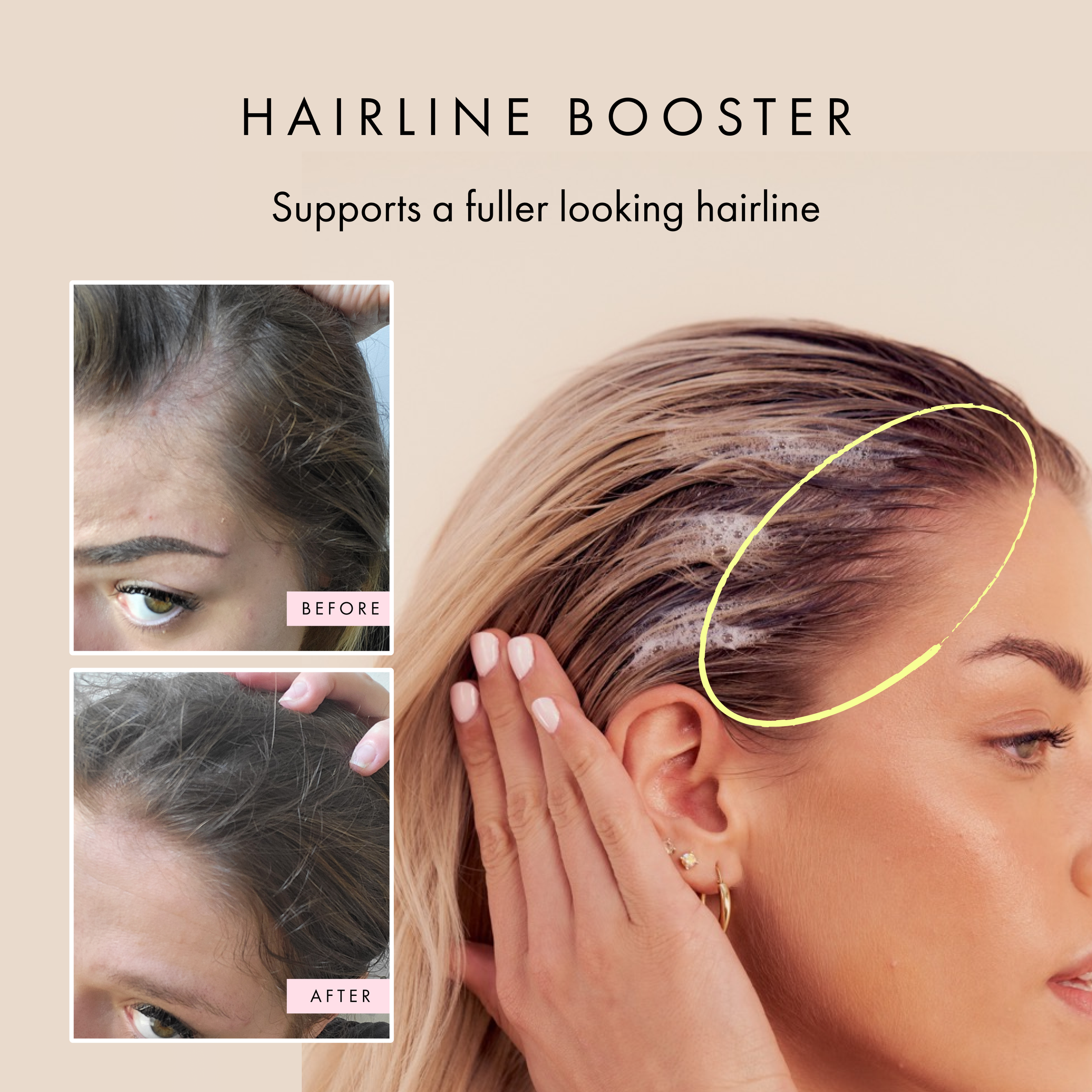
During pregnancy, elevated oestrogen levels do something wonderful for your hair, they hold a much larger percentage of it in the growing phase for longer than normal. This is why so many people notice thicker, fuller hair during pregnancy.
The catch: once you give birth, oestrogen levels drop sharply. All those hairs that were "held back" in the growing phase suddenly shift into the resting phase together and a few months later, they shed together too. This is called postpartum telogen effluvium, and it typically shows up around 2-4 months after birth, peaks around month 3-4, and usually resolves on its own within 6-12 months as your hair cycle re-balances.
It can feel alarming, especially on top of the exhaustion of early parenthood, but it's a temporary, hormonally-driven event, not permanent hair loss.
What's happening during menopause
Menopause tells a similar story, but the timeline is longer and the cause is a bit different. As oestrogen and progesterone decline during perimenopause and menopause, the balance between oestrogen and androgens (male hormones present in smaller amounts in everyone) shifts. Androgens can shorten the hair growth phase and shrink hair follicles over time, leading to gradual thinning, particularly around the crown and part line, rather than the sudden, all-at-once shedding seen postpartum.
Because it happens slowly, menopause-related thinning is often mistaken for "just getting older," when it's actually a specific, hormonally-driven process, which also means there are specific things that can help.
So what actually helps?
The honest answer: hair loss driven by hormonal shifts responds best to giving the hair follicle real support during the growth phase, not quick fixes, but consistent, science-backed ingredients used over months, since hair growth cycles are slow by nature (typically 3+ months before you'll see a visible difference).
One ingredient worth knowing about is pea sprout extract, a plant-derived active that's been studied specifically for its effect on the hair growth cycle. In clinical research, this pea sprout extract was shown to meaningfully improve the ratio of active (growing) hair follicles to resting (shedding) ones over a three-month period, essentially helping rebalance the cycle that both postpartum shedding and menopausal thinning disrupt.
This is the same active ingredient behind Hair Gain, a hair supplement designed to support the hair growth cycle from within. It's not a miracle fix, and it won't reverse shedding overnight, but for hair loss rooted in hormonal changes, supporting the growth cycle itself is exactly where the science points.
The main thing to take away
Postpartum shedding and menopausal thinning are two of the most common and most explainable, types of hair loss out there. Neither means something is "wrong" with you, and both are tied to completely normal hormonal transitions. Understanding why it's happening is often the first bit of relief in itself. From there, giving your hair's growth cycle genuine, consistent support is the most evidence-based place to start.
If hair loss feels sudden, patchy, or is causing you significant distress, it's always worth checking in with your GP or a dermatologist to rule out other causes.