
Walk into any pharmacy or health food store and you’ll find an entire wall of meal replacement shakes. They all promise results. Most of them look similar on the front of the pack. But turn them around and read the ingredients, and a very different picture emerges.
Understanding what sustainable weight loss actually requires nutritionally helps cut through the noise and helps your clients make choices that work with their body rather than against it.
Why most meal replacement shakes don’t work long-term
The majority of weight loss shakes on the market are built around cheap, fast-digesting protein sources, typically whey or pea protein, combined with maltodextrin, gums, emulsifiers and artificial sweeteners. These formulas are inexpensive to produce, have a long shelf life and mix easily. But they have a fundamental problem: they digest too quickly.
When protein digests rapidly, the feeling of fullness it creates is short-lived. Blood sugar rises and falls quickly, hunger returns within a couple of hours, and cravings follow. For someone trying to replace one or two meals a day as part of a weight management plan, this is a significant obstacle and it’s why so many people give up on meal replacement programmes within the first few weeks.
There’s also the gut factor. Ultra-processed ingredients can disrupt the gut microbiome over time, contributing to bloating, irregular digestion and inflammation. For clients who are already dealing with gut issues, adding a low-quality shake to their routine can make things worse rather than better.
The role of protein quality in weight management
Not all protein is equal when it comes to satiety and body composition. The type of protein in a meal replacement matters as much as the quantity.
Casein protein, derived from milk, is a slow-digesting protein that releases amino acids steadily over several hours rather than all at once. This sustained release is what creates genuine fullness and helps maintain stable energy between meals. It also plays an important role in muscle preservation during weight loss, which matters because losing muscle alongside fat slows metabolism and makes long-term weight maintenance harder.
Collagen peptides are a different form of protein with their own specific role. Rather than acting primarily as a satiety protein, collagen supports the structural integrity of the skin, hair and connective tissue, areas that can be visibly affected by rapid weight loss. As the body loses volume quickly, skin elasticity and hydration can decline. Collagen peptides with zinc provide targeted nutritional support for maintaining skin quality during the weight loss process, which is a conversation that sits very naturally within a salon or clinic environment.
Gut health and weight loss - a two-way relationship
One of the most important and most overlooked aspects of weight management is gut health. The relationship between the gut microbiome and body weight is well established in the research, the composition of gut bacteria influences how we digest food, how we absorb nutrients, how we experience hunger and even how we store fat.
Prebiotic fibre plays a central role here. Prebiotics feed the beneficial bacteria in the gut, supporting a healthier microbiome balance, improving digestive regularity and reducing the bloating that many people experience when changing their diet. Clinical research on specific prebiotic strains has shown measurable improvements in gut health markers within as little as seven days, which is meaningful for anyone starting a new nutritional programme.
Digestive enzymes add another layer of support. Protein is the most demanding macronutrient for the digestive system to process, and many people, particularly those with compromised gut function, don’t produce sufficient enzymes to digest it efficiently. This can result in discomfort, bloating and poor nutrient absorption even from a high-quality protein source. Including a broad spectrum of digestive enzymes alongside a probiotic specifically studied for protein digestion helps ensure the nutrition in the shake is actually being absorbed and used by the body.
The GLP-1 connection
GLP-1 medications have changed the weight management landscape significantly, and with that comes a nutritional consideration that’s become increasingly important. These medications work in part by slowing gastric emptying and reducing appetite, which means that the quality of the nutrition consumed becomes even more critical when overall intake is reduced. Getting adequate protein, gut support and micronutrients within a smaller dietary volume is a genuine challenge, and a thoughtfully formulated meal replacement can play a valuable role in filling those gaps.
What clean actually means
The word clean gets used loosely in the supplement industry, so it’s worth being specific. A genuinely clean formulation has no artificial sweeteners, no artificial flavours or colours, no emulsifiers, no fillers, no gums and no maltodextrin. It’s sweetened naturally, typically with stevia or monk fruit and every ingredient on the label serves a functional purpose.
This matters not just for health reasons but for how the product performs. Cheap fillers dilute the nutritional density of a formula. Artificial sweeteners can disrupt gut bacteria and perpetuate sweet cravings. Gums and emulsifiers contribute to the digestive discomfort that puts many people off shakes entirely.
A clean formulation is also one that clients can read and understand and that’s increasingly important to a more nutritionally aware consumer.
A note on realistic expectations
Sustainable weight loss sits in the range of one to two kilograms per week when a meal replacement is used to substitute one to two meals per day as part of a calorie-reduced diet that includes movement. This is the range that’s both achievable and protective of lean muscle mass. Faster results are possible in the short term but often come at the cost of muscle loss and metabolic adaptation, both of which make maintaining weight loss harder in the long run.
The best nutritional approach to weight management is one that supports the body’s processes rather than fighting them: adequate slow-digesting protein, gut microbiome care, collagen support for skin and connective tissue health, and clean ingredients the digestive system can actually handle.
My Way Up Lean Up Shake
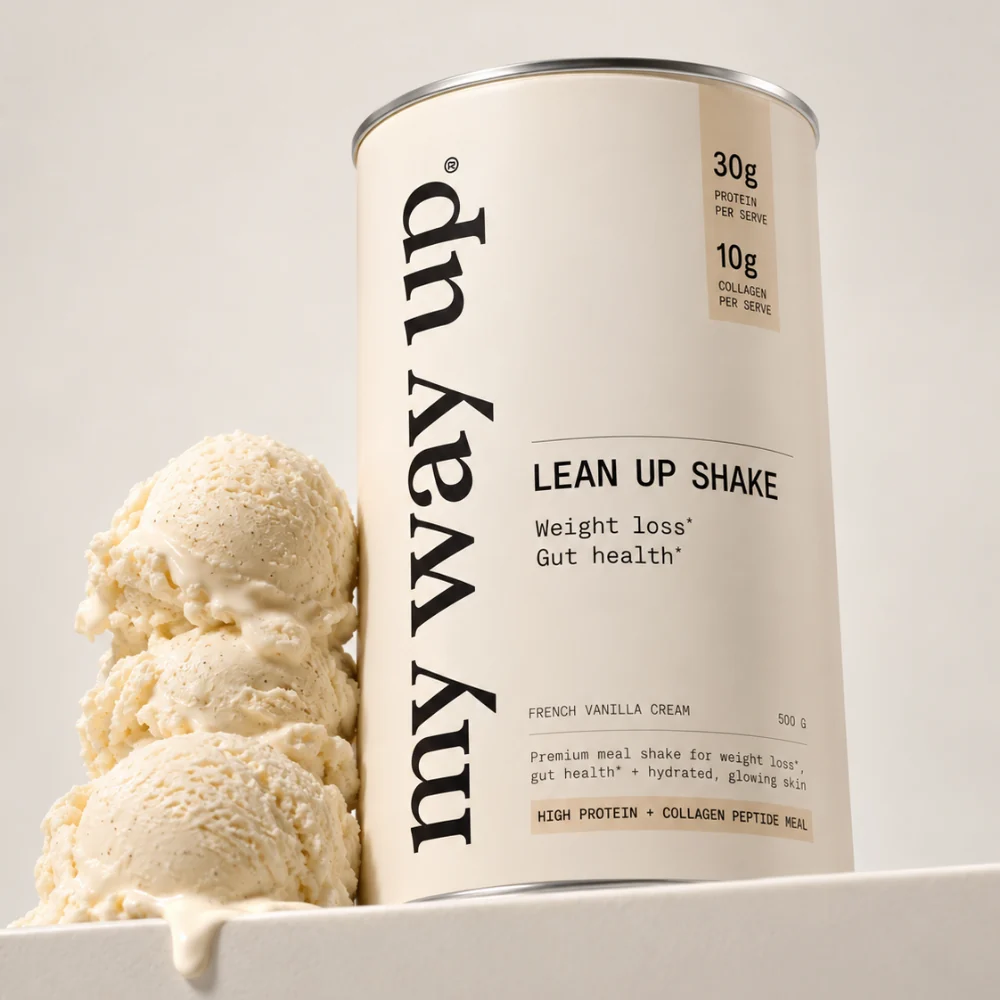
The Lean Up Shake from My Way Up is formulated around exactly these principles, 30g of slow-digesting casein and collagen protein per serve, Bimuno® GOS prebiotic fibre, the BC99® probiotic for protein digestion support, a full digestive enzyme complex, and a complete vitamin and mineral blend. No artificial sweeteners, no fillers, no gums.
It’s available now through Grace Beauty for salons and clinics looking to extend their wellness offering into nutrition. If you’d like to know more or place an order, get in touch with our team.